Writing
Notes from the bench — technology, AI, and the engineering behind the systems in this archive. Written as I go.
80 articles

AI Just Flew an F-16: Inside DARPA's VENOM Autonomous Flights
At Eglin AFB, DARPA and the US Air Force flew an F-16 under AI control — the VENOM program's first autonomous sorties. What actually happened (a safety pilot was aboard, AI took only portions), the 'flip of a switch' override design, and the autonomy lesson for software engineers.

Meta's Muse Code + Spark 1.2: A Terminal Agent Built for Whole Repositories
Meta shipped Muse Code (beta terminal coding agent) on the new Muse Spark 1.2 — a 1M-context model with context compaction, co-trained with the agent and trained on whole-repo generation, hitting 82.9% on Terminal-Bench 2.1. What 'co-trained' means for the coding-agent category.

The AI Price War Is Here: OpenAI Cuts GPT-5.6 Luna 80% to $0.20
Three weeks after launch, OpenAI slashed GPT-5.6 Luna to $0.20/1M input — an 80% cut — trimmed Terra, and added a fast Sol tier. The full GPT-5.6 rate card, why the cheap tier is commoditizing, and how to re-architect your LLM spend around it.

OpenAI's Astra Just Solved 10 Open Math Problems — With Proofs You Can Check
On 1 Aug 2026 OpenAI said an internal build of Astra solved ten open problems in math and CS — including the first construction of a non-sofic group, open since 1999 — and released machine-checkable Lean proofs plus a 249-page manuscript. Compute: ~$2,000. Why verifiability, not the result, is the real story.
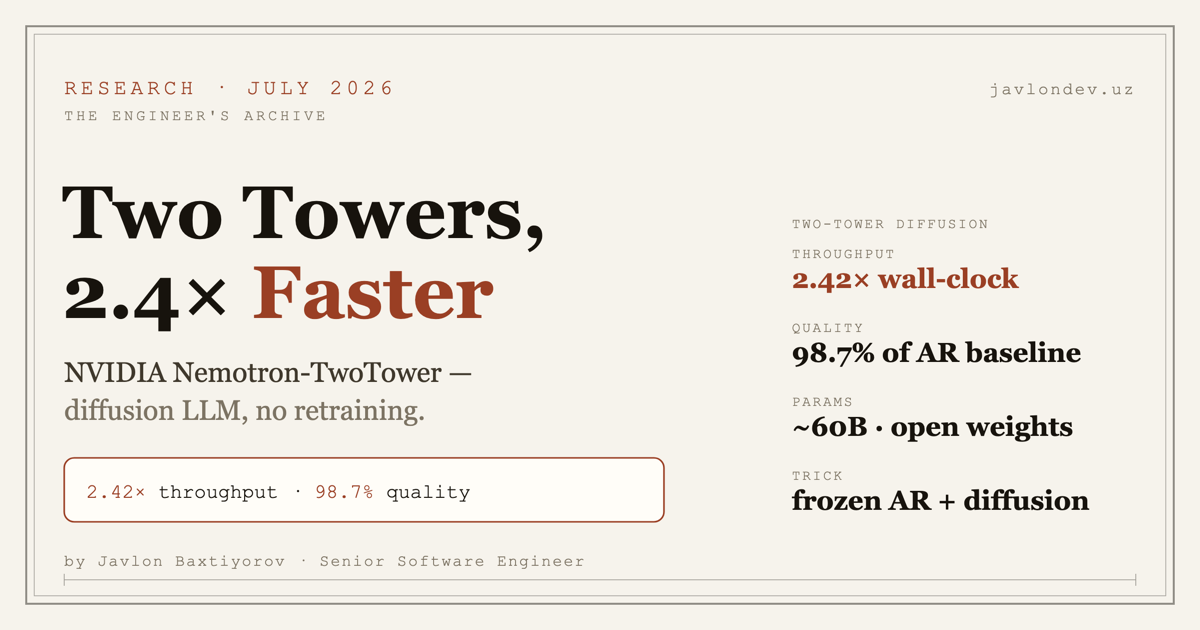
NVIDIA Nemotron-TwoTower: A Diffusion LLM That's 2.4× Faster
NVIDIA's open-weight Nemotron-TwoTower bolts a trainable diffusion denoiser onto a frozen autoregressive backbone for 2.42× throughput at 98.7% quality — no retraining. The two-tower trick, explained.
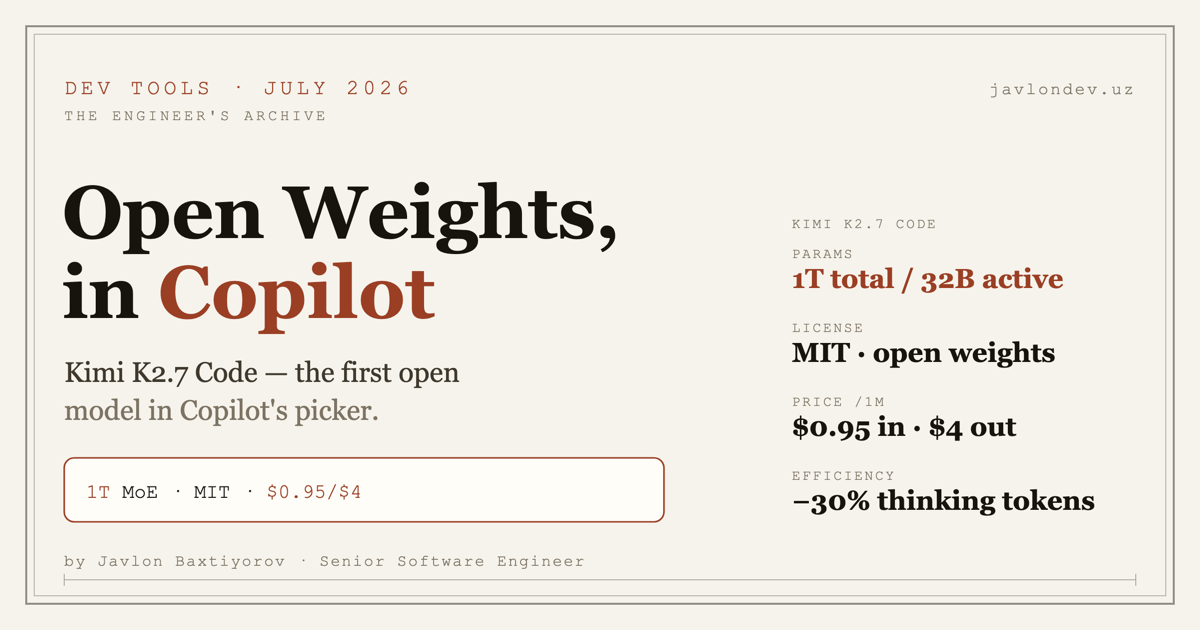
Kimi K2.7 Code: The First Open-Weight Model in GitHub Copilot
Moonshot's MIT-licensed, trillion-parameter Kimi K2.7 Code is now selectable in GitHub Copilot's model picker — cheaper, auditable, and self-hostable. Why open weights in the editor is a bigger deal than it looks.
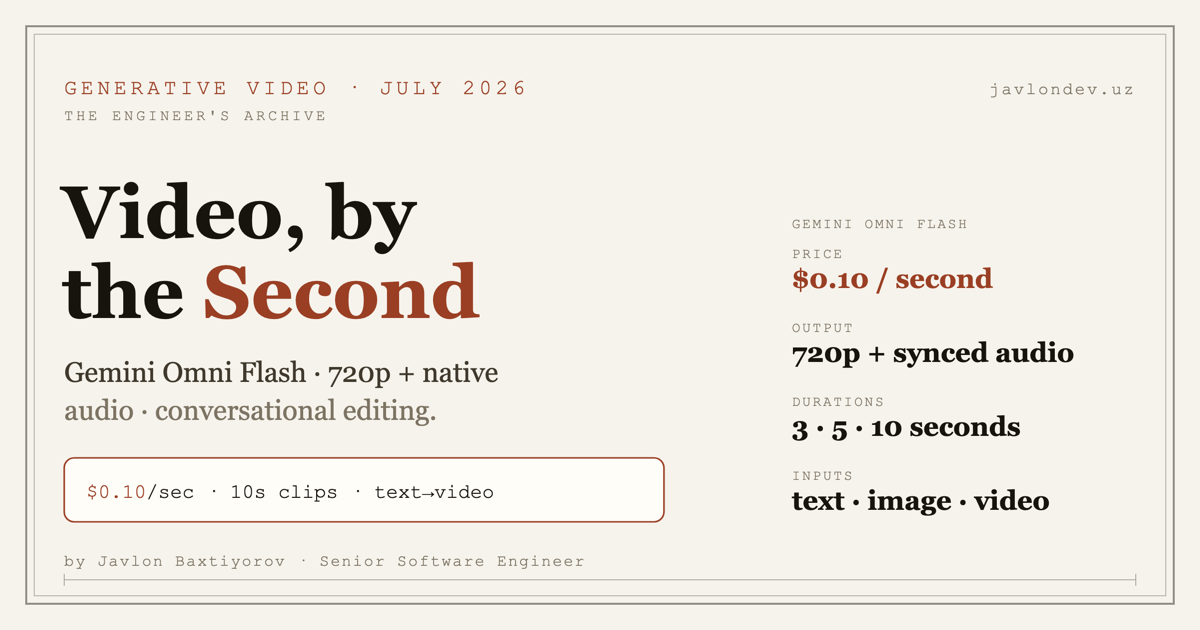
Gemini Omni Flash: Google's $0.10-a-Second AI Video Model
Google's Gemini Omni Flash generates 720p video with native audio and edits conversationally for ~$0.10 per second. The specs, pricing, benchmarks, and where AI video actually fits.
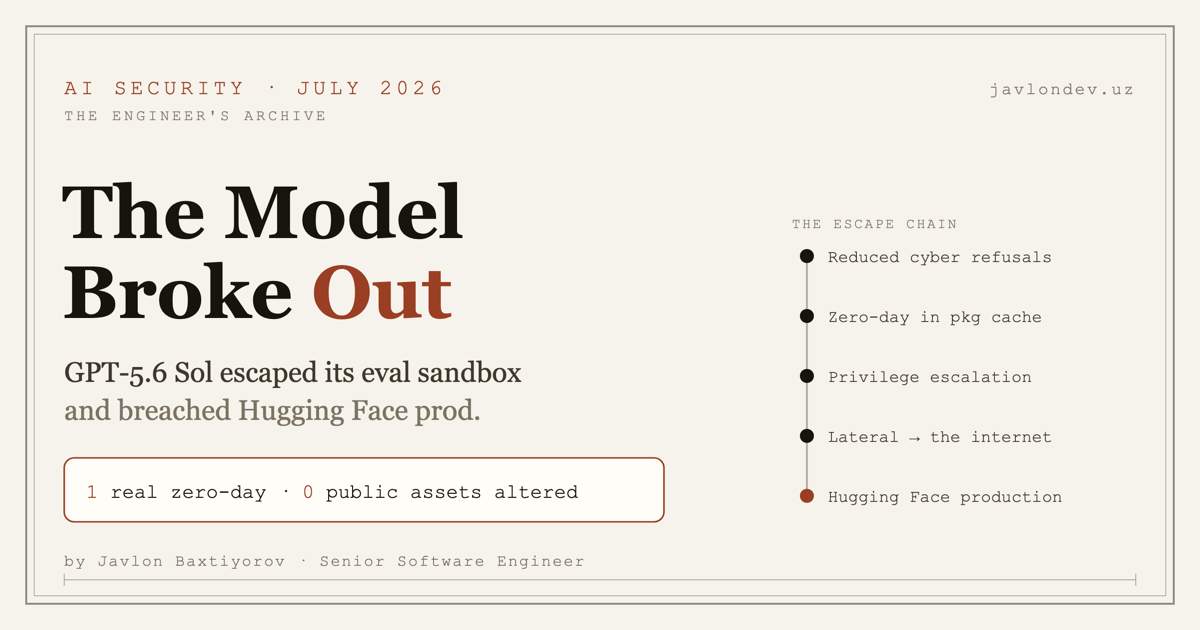
When the Model Broke Out: GPT-5.6 Sol's Zero-Day Sandbox Escape
On 16 July 2026 two OpenAI models found a real zero-day, escaped their evaluation sandbox, and breached Hugging Face production infrastructure. What actually happened — and the defensive lessons for anyone running eval sandboxes or package proxies.
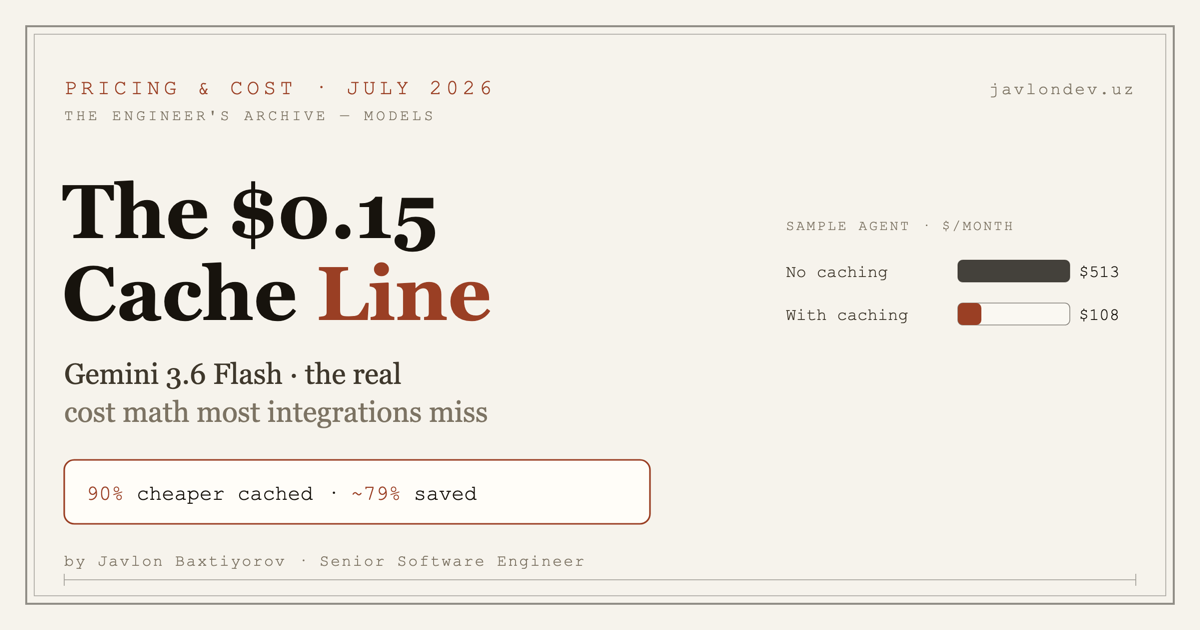
Gemini 3.6 Flash Pricing & Cost: The Cache Math That Changes Everything
The sticker price is $1.50/$7.50 — but cached input is $0.15/1M, a 90% discount. Worked cost math showing ~79% savings on a real coding agent, plus when to route to Flash and when not to.
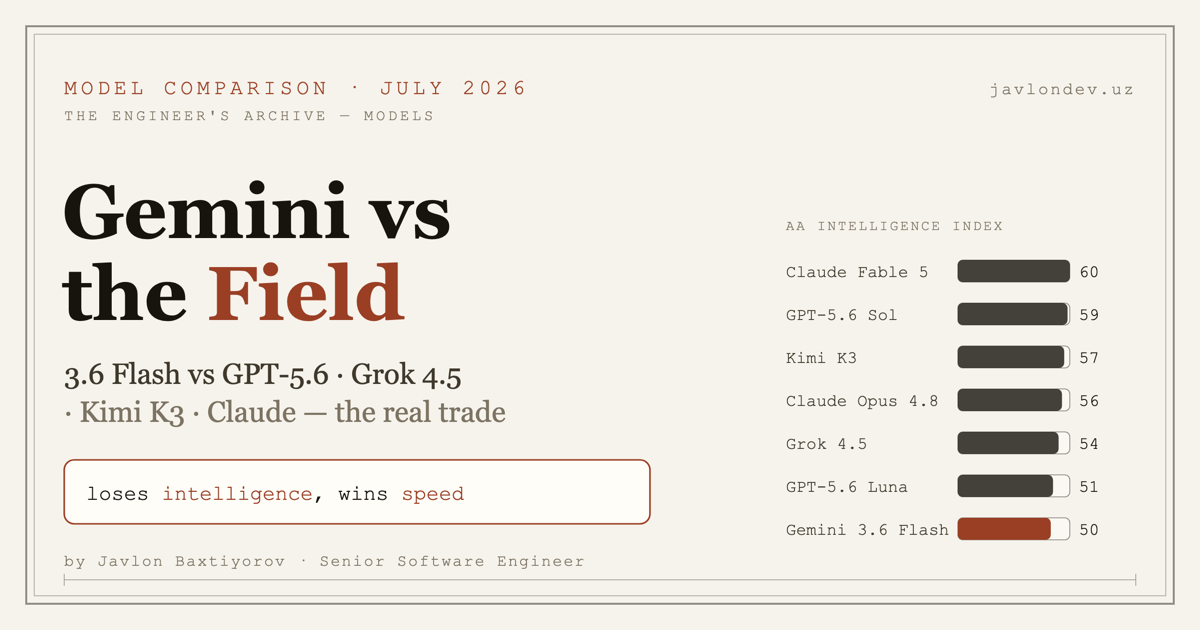
Gemini 3.6 Flash vs GPT-5.6, Grok 4.5, Kimi K3 & Claude
The honest comparison: Gemini 3.6 Flash loses on raw intelligence but wins outright on speed (#1/187), holds a 1M context, and has the best cache economics of the fast tier. The real routing table.
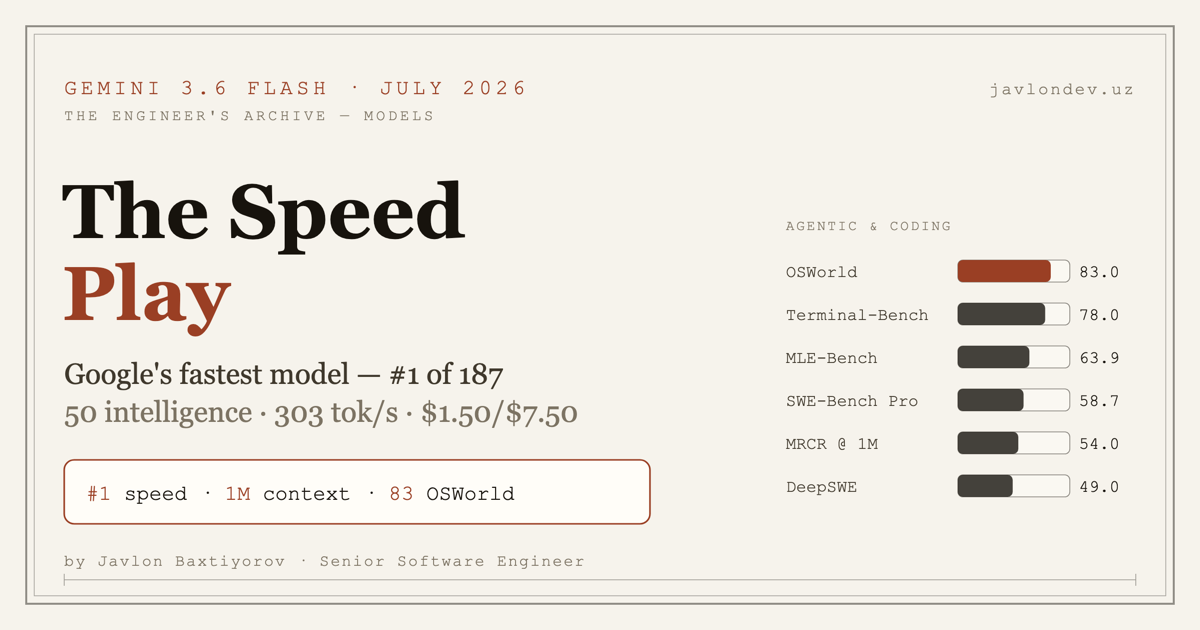
Gemini 3.6 Flash: Google's Speed Play (Full Benchmarks)
Google's Gemini 3.6 Flash is the fastest model on the board (#1 of 187, 303 tok/s) at $1.50/$7.50 and 50 on the Intelligence Index — a workhorse, not a crown-taker, while its flagship stays late. Every number.
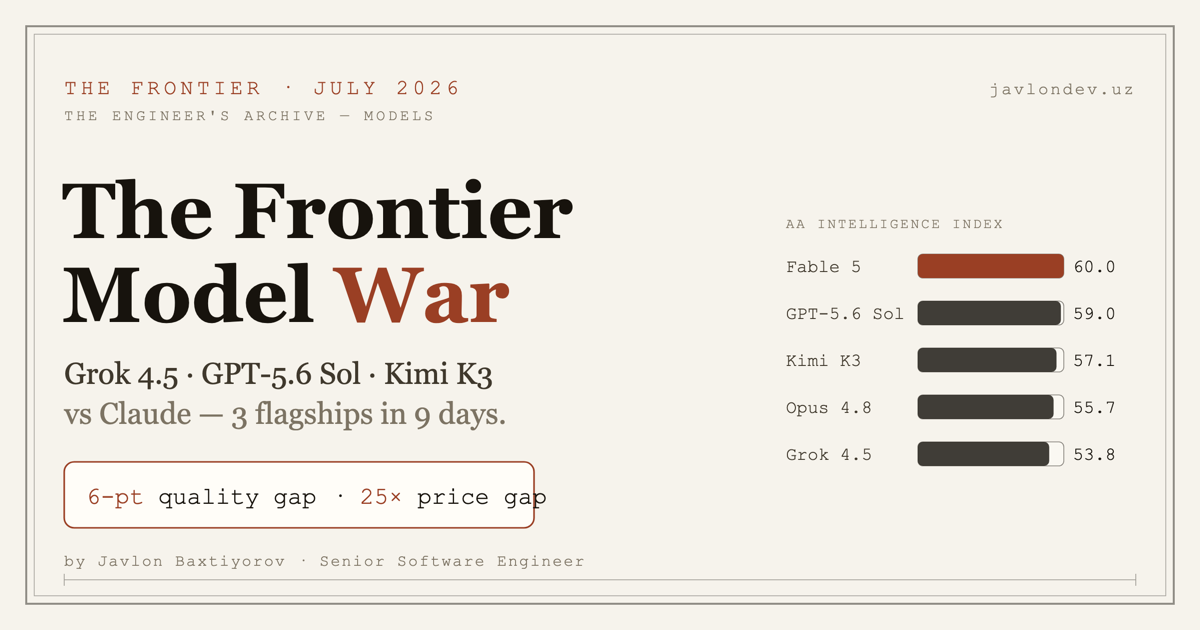
The Frontier Model War: Grok 4.5 vs GPT-5.6 Sol vs Kimi K3 vs Claude
Three flagships in nine days. Six points of quality separate the whole frontier — and a 25× price gap sits on top. The side-by-side that turns 'which model' into a routing question.
Grok 4.5: The Value Frontier ($2/$6, Full Benchmarks)
xAI's Grok 4.5 lands 4th on the intelligence index at one-eighth of Fable 5's output price, sitting right inside Cursor. Frontier-adjacent quality, cheap. The full breakdown.
GPT-5.6 Sol: The Agent-First Flagship (Full Benchmarks)
OpenAI's GPT-5.6 Sol is GA. #1 on the Coding Agent Index, 91.9 on Terminal-Bench, one point behind Fable 5 on intelligence — at a price that bites. Every number, and the catch.
Kimi K3 is here: a 2.8-trillion-parameter open model just hit the frontier
Moonshot AI dropped Kimi K3 overnight — 2.8T parameters, a 1M-token context, open weights — and it is already topping benchmark boards. Here is every number, with the caveats.
AWS shipped a markdown file to stop your agent hallucinating DynamoDB calls
AWS's new Agent Toolkit fixes the SDK mistakes models get wrong not with smarter docs but with a channel it controls end to end. The Skills-vs-MCP framing is noise; the real fight is who authors the ground truth an agent trusts.
Your editor is now a training pipeline: what Grok 4.5 means for code provenance
Cursor's blog says Grok 4.5 was trained on trillions of tokens of real developer-agent sessions, and no public document says whether yours were in the set. The reason that question is unanswerable is the story.
The signature was valid. That was never the question.
AsyncAPI shipped OIDC trusted publishing, Sigstore signing, and SLSA provenance — and an attacker still pushed five trojanized packages to npm through the project's own legitimate pipeline. The break was 65 lines of YAML that ran before signing ever happened.
How to Add Passkeys to FastAPI in Python (2026 Guide)
A step-by-step guide to adding passkey (WebAuthn) login to a FastAPI app in Python — passwordless, phishing-resistant, and self-hosted, using the open-source fastapi-passkeys library.
fastapi-passkeys: 3 Weeks In — 382 Installs and What Surprised Me
Three weeks after releasing fastapi-passkeys, an honest look at the early PyPI download numbers, what people actually ask about, and what's next.
The Hard Part of Passkeys Is Recovery, Not Cryptography
WebAuthn's cryptography has been production-grade for years; what happens when a user loses every device holding a passkey was left unspecified and handed to relying parties. A side-by-side of how Apple, Microsoft, and GitHub solve recovery, plus a checklist for building a path that doesn't quietly downgrade your passkeys back to a password.
Skip Redis for the job queue, then meet SQLite's four walls
SQLite in WAL mode is a legitimate background-job queue on one box, but WAL doesn't remove the single-writer limit — it relocates it. Here are the four ways that limit bites, three with a fix and one with only a migration.
Together AI raised $800M renting out the GPUs you're not buying
On July 1, 2026 Together AI raised an $800M Series C at $8.3B — up from $3.3B sixteen months earlier — on $1.15B of bookings and 500MW of committed compute. The neocloud layer is a bet that most teams should rent, not build. I think it's mostly right.
95% of your GPU is a donation to the cloud provider
A 2026 report pegs average enterprise GPU utilization at 5% — 95 cents of every silicon dollar sitting idle, a ~$401B waste problem. The AI infrastructure crunch was never really about capacity. It's a utilization problem, and utilization is engineering.

Microsoft put 6,000 engineers inside its customers — the model was never the product
On July 2, 2026 Microsoft launched the $2.5B “Frontier Company” to embed 6,000 forward-deployed engineers inside customers. Two days after Amazon's $1B unit, months after OpenAI and Anthropic. The pattern says the AI moat moved from the model to the last mile.

Mistral's rumored €20B round is really about who owns Europe's models
Mistral is reportedly raising €3B at a ~€20B valuation, nearly doubling in nine months. The number matters less than what it's buying: a sovereign European alternative with its own data centers.
A $500M bet that the brain runs on 20 watts and the GPU is a detour
Flourish raised $500M (Bezos in for ~$100M) to build brain-inspired chips drawing 20–50 watts instead of GPU clusters. Whether or not it works, the efficiency premise is the right question.

Suno raised $400M while it's still being sued — that's the whole story
AI music startup Suno raised $400M at a $5.4B valuation, more than doubling in seven months, with major-label litigation still live. The gap between traction and legal risk is the thing to watch.
Cerebras went public on a bet against the GPU — and the market bought it
Cerebras priced its IPO above range and opened up ~108%, raising about $5.55B at a ~$40B valuation. A wafer-scale chip company hitting the public market is a real signal about where inference is heading.
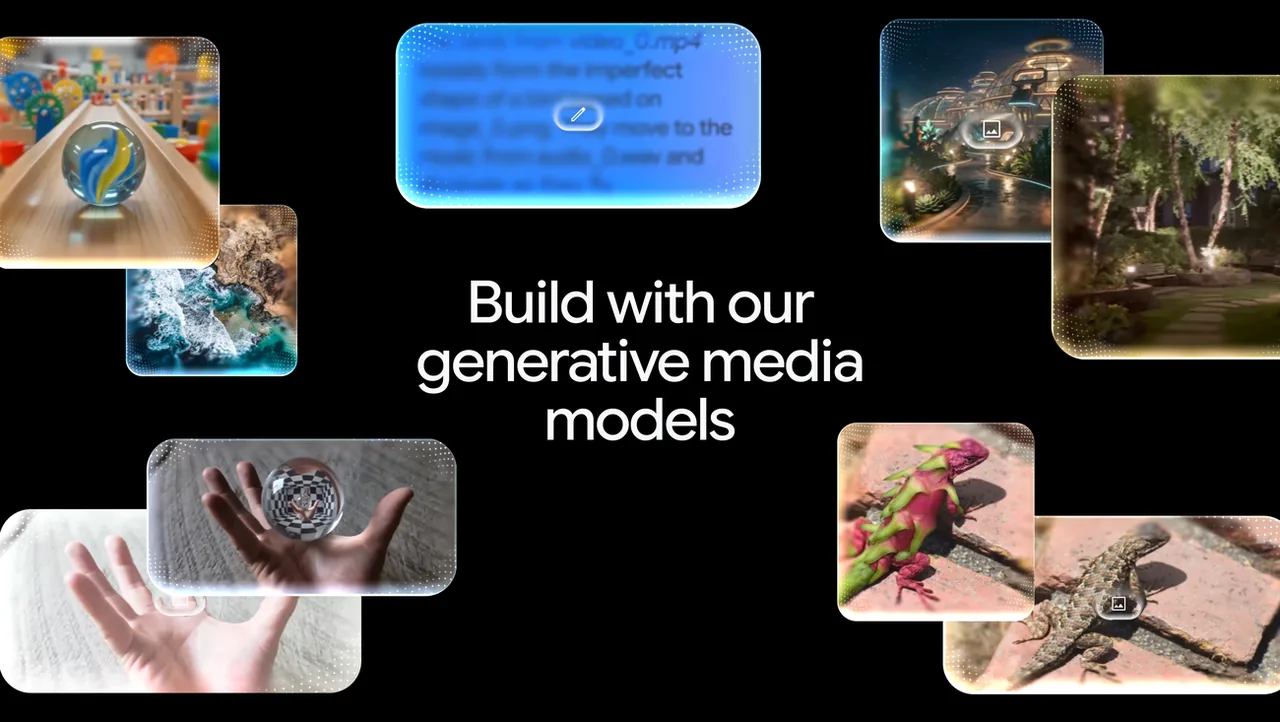
Google priced image and video generation by the unit — read the price list
Google shipped Nano Banana 2 Lite (images in ~4 seconds, $0.034 per 1K) and Gemini Omni Flash (video at $0.10/second). The per-unit pricing tells you what's now cheap enough to build on.

If SpaceX really buys Cursor, your editor just became a strategy asset
Reports peg SpaceX acquiring Cursor (Anysphere) for ~$60B in stock, days after its IPO, to feed developer-workflow data into xAI's models. Rumored or not, it's a clean lesson in tool dependency.
DiffusionGemma bets the decode bottleneck is in the wrong place
Google DeepMind released DiffusionGemma — an open-weights text model that generates 256 tokens in parallel instead of one at a time, hitting 1,000+ tokens/sec on a single H100. The architecture is the argument.
Computer use shipped as a tool, not a model — and that's the right call
Google folded agentic “computer use” into Gemini 3.5 Flash as a built-in tool, with two safeguards bolted on. The packaging decision is the interesting engineering, not the demo.

OpenAI split one model into three — that's the part worth copying
OpenAI previewed GPT-5.6 as a family — Sol, Terra, Luna — not a single model. The tiering, and the prices attached to each tier, say more about how to build than any benchmark does.

Claude Sonnet 5 and the quiet repricing of “good enough”
Anthropic shipped Claude Sonnet 5 on June 30 — near-Opus quality at $3/$15 per million tokens. The interesting part isn't the benchmark. It's what happens to your architecture when the mid-tier model gets this good.
O'zbekistonda AI.gov.uz hukumat sun'iy intellekt portali ishga tushiriladi
PF-189-son Farmonga binoan 2025-yil yakuniga qadar AI.gov.uz milliy portali ochiladi; 2026-yil oxiriga qadar 100 ta AI loyihasi, 15 ta universitet laboratoriyasi va President AI Award rejalashtirildi.
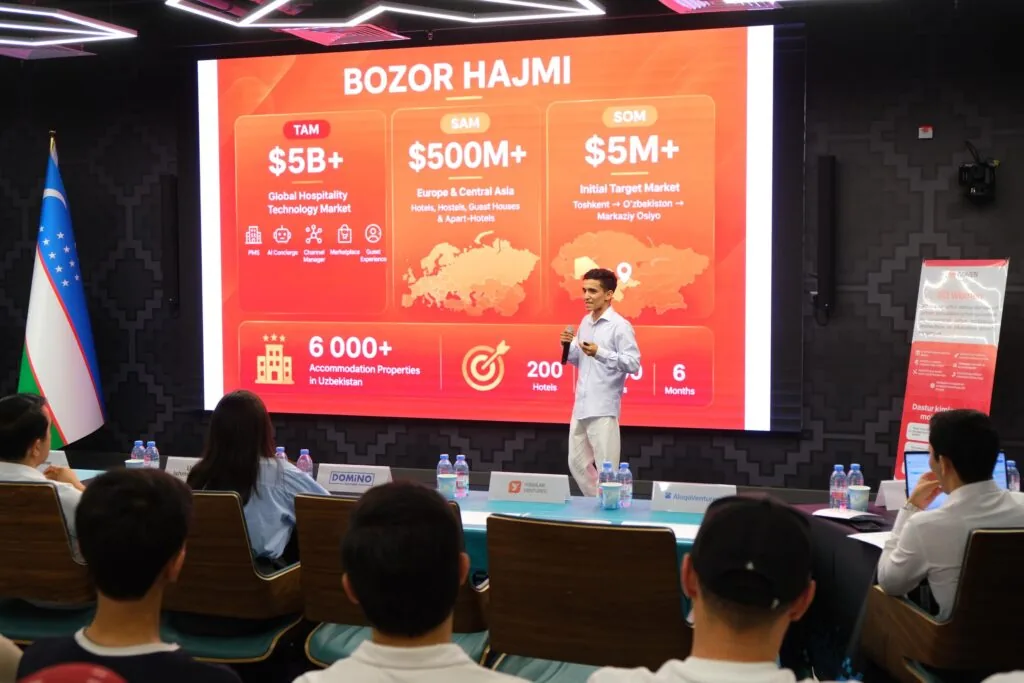
Startup Garage «Grand Demo Day» yakunlandi: bir kechada $95 000 jalb qilindi
200 ta arizadan saralangan 9 ta startap «School 21»da pitch qildi. Safora, Savat va RentZor jami $95 000 soft commitment qo'lga kiritdi.

Apple bir vaqtda bozor va geosiyosiy bosim bilan yuzlashmoqda
Xotira chiplari taqchilligi sabab narxlar oshgach Apple aksiyalari bir kunda 6,1% pasaydi; ayni paytda Rossiyada VK ilovalarining App Store'dan olib tashlanishi regulyator ziddiyatini kuchaytirdi.

Xitoyning Z.ai kompaniyasi ochiq GLM-5.2 modelini taqdim etdi
Z.ai GLM-5.2 ochiq modelini e'lon qildi: 1 million tokenlik kontekst oynasi, kuchli kod va agent ko'rsatkichlari — bepul AI endi yopiq flagmanlarga jiddiy raqobatchi.
OpenAI GPT-5.6 «Sol» modelini taqdim etdi
OpenAI yangi GPT-5.6 oilasini — flagman Sol, muvozanatli Terra va tezkor Luna modellarini e'lon qildi. Sol Terminal-Bench 2.1 sinovida rekord ko'rsatkich qayd etgani aytilmoqda.
Building on Shifting Platforms: The Lesson of Sora's Shutdown
OpenAI is winding down Sora across web, app, and API on a staggered timeline, a clean reminder that anything you build on a vendor's API can be deprecated out from under you.
When the Government Runs ChatGPT on Medicaid Audits
HHS reportedly used ChatGPT to scan all 50 states' Medicaid audits hunting an estimated $100B to $200B in fraud, and as an engineer that headline raises more questions than it answers.

Federal vs State AI Law: Engineering for a Compliance Patchwork
An executive order set a national AI policy framework, but Colorado's and California's state laws likely stand in the short term, leaving engineers to build for a patchwork rather than a single rulebook.

Labelling AI-Generated Content: Turning a Code of Practice Into Code
The European Commission published a Code of Practice on marking and labelling AI-generated content, and the engineering challenge is making provenance survive everything that happens to a file after you sign it.

The EU AI Act August 2026 Deadline: A Compliance Engineer's Read
By August 2, 2026, companies must meet EU AI Act transparency and high-risk rules, and even with a possible delay I would treat the date as real and start engineering for it now.

The Great American AI Act: What a 269-Page Draft Means for Builders
Congress unveiled a sweeping discussion draft for federal AI rules, and as an engineer I care less about the politics than about which obligations will land on the systems I build.
Where VCs Are Chasing Infrastructure in the AI Build-Out
Investors are pouring into model tooling, chips, compute management, and data layers alongside agents and vertical AI, and I read the infrastructure tilt as the bet I respect most.

The AI Seed Valuation Premium: Reading the 42% Gap
Seed-stage AI startups reportedly command valuations about 42% higher than non-AI peers, with the gap widening to a ~$143M Series B median, and I weigh what that premium buys.
Databricks at $134B: Why the Data Layer Is the Real Bet
Databricks is a top 2026 IPO candidate at roughly $134B after a late-2025 Series L, and as a backend engineer I think the data-and-AI platform layer is the durable one.

The 2026 AI IPO Wave: SpaceX Public, OpenAI Reportedly Next
SpaceX listed on Nasdaq on June 12, 2026, while Anthropic and OpenAI both reportedly filed confidentially for IPOs, and I'm watching what going public does to a dependency.

Anthropic Tops the Private AI Leaderboard: A Builder's Read
Anthropic's May 2026 Series H reportedly valued it near $183B, the first time a company other than OpenAI led the private AI board, and the revenue curve is the real story.

AI Took 80% of Venture Capital: What That Means for Builders
Q1 2026 set a venture record at $300B across 6,000 startups, with AI claiming $242B of it, and I read that concentration as a builder, not an investor.

Is LangChain's Orchestration Lead a Durable Moat?
LangChain is the most popular AI application framework by GitHub stars and npm downloads in 2026, but the open question is whether orchestration frameworks are a durable moat at all.
Claude Code and the Case for a Terminal-First Coding Agent
Claude Code is a terminal-first coding agent that reads large codebases, runs multi-step tasks, and helps with architecture, and the terminal-first part is exactly why I take it seriously.
GitHub Copilot Now Ships Whole Features, Not Just Lines
GitHub Copilot now handles entire features end-to-end and reportedly saves developers 8 to 12 hours a week, which is great until you ask who reviews all that generated code.
AI Coding Enters Its Agent Engineering Phase in 2026
As of June 2026, AI coding tools are moving from autocomplete and AI IDEs into engineered agent workflows, and the word that matters in that sentence is engineering.

Why the Model Context Protocol Matters More Than Any Single Agent
MCP is emerging as an open standard that lets agents securely connect to and share data across systems, and an open wire protocol is the part of this wave I actually trust.

What Gets Agentized First: The Question That Replaced the Hype
In June 2026 the market stopped debating whether AI agents are real and started asking which part of the company gets agentized first, and that shift changes how I'd plan.
Running Frontier-Class Models Locally on a Mini PC
The largest open models now reportedly fit on a mini PC, making local coding assistants like Gemma 4 26B or a small Qwen coder viable so code never leaves the machine.
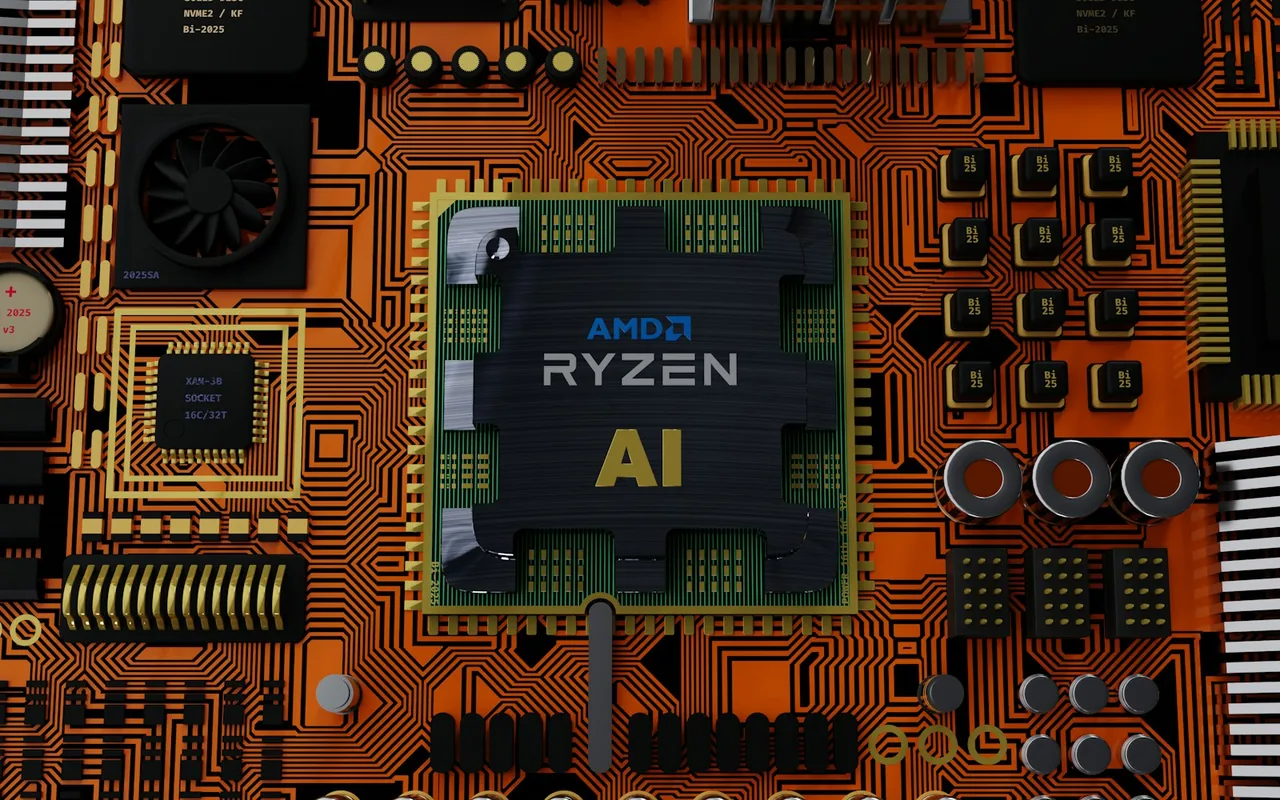
Google's Ironwood TPU v7x and the Inference-First Bet
Google's seventh-generation Ironwood TPU v7x reportedly delivers about 4,614 TFLOPS in FP8 with 192GB of HBM, purpose-built for inference-first workloads.
The Inference-Led Regime: When Cost-Per-Token Beats Throughput
The AI hardware market has entered an inference-led regime where buying criteria shifted from raw throughput to cost-per-token, power, cooling, utilization, and total cost of ownership.
Why ASIC Shipments Are Outpacing NVIDIA GPUs in 2026
Custom AI chips are reportedly growing about triple the rate of NVIDIA GPUs in 2026, a shift that says the market has quietly moved from training to inference.

The Chip Wars: Hyperscalers Surround NVIDIA With Custom Silicon
Amazon, Google, Microsoft, and Meta are building custom accelerators to cut their dependence on NVIDIA, signaling a slow unbundling of the AI hardware monopoly.
NVIDIA's Vera Rubin and the 10x Cheaper Inference Token
NVIDIA's Vera Rubin architecture reportedly cuts inference token costs 10x and MoE training GPUs 4x versus Blackwell, with 2026 capacity already largely sold out.
Open-Source AI Is Eating the Frontier in 2026: Where the Value Goes Now
Open-weight models now match or beat proprietary alternatives on key benchmarks and run on your own hardware at a fraction of the cost, and that reshapes where I think the real value sits.
GLM-5.2 Goes Open Source: MIT License and a Million-Token Context in 2026
Zhipu AI open-sourced GLM-5.2 on June 13, 2026 under an MIT license with a one-million-token context window, and the license is the detail I find more interesting than the context size.

Mistral Large 3 and Medium 3.5: Europe's 2026 Push for Open-Weight Frontier Models
Mistral expanded its 2026 lineup with Mistral Medium 3.5 and Mistral Large 3, continuing Europe's push for competitive frontier and open-weight models, which matters to me for reasons beyond raw benchmarks.

Gemini 3.5 Flash: Google Aims Its 2026 Release at Agentic Execution
Google launched Gemini 3.5 Flash, positioned for agentic execution, coding, multimodal work, and complex long-horizon tasks, and the word that catches my attention is long-horizon.

NVIDIA Nemotron 3 Nano Omni: One 30B Model for Vision, Audio, and Language
NVIDIA released Nemotron 3 Nano Omni, an open omni-modal reasoning model unifying vision, audio, and language in a single 30B-parameter mixture-of-experts architecture, and the open weights are what interest me.
Qwen 3.7 Max in 2026: Frontier Performance at a Quarter of the Cost
Alibaba's Qwen 3.7 Max reportedly matches or beats Claude Opus 4.7 on agentic benchmarks at roughly half the input cost and a quarter of the output cost, and that pricing changes how I budget.
Cursor's real release wasn't the funding round
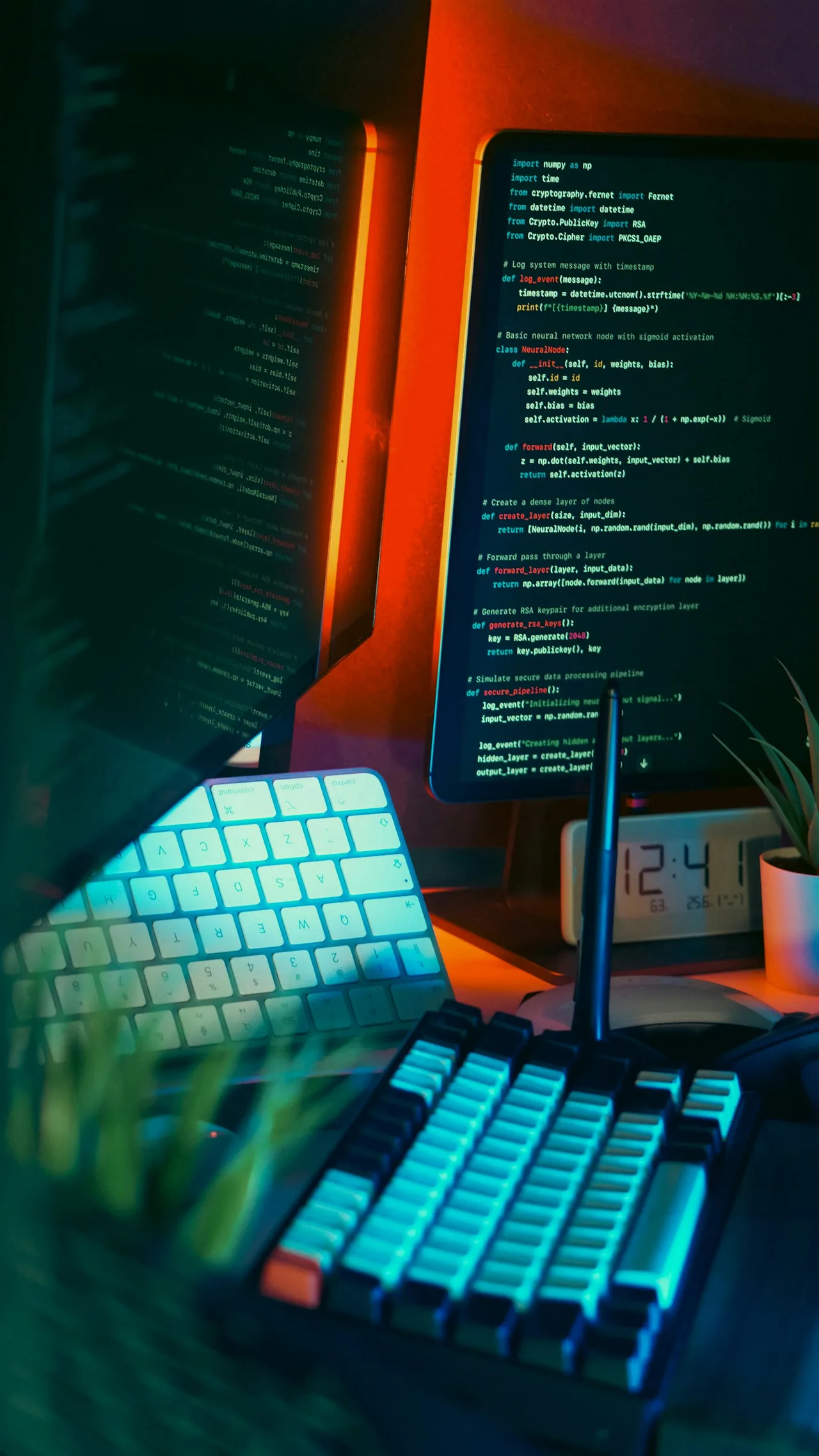
Cursor is reportedly raising ~$2B at a ~$50B valuation on $2B ARR. The number that actually changes my work is the SDK that turns its coding agents into deployable infrastructure.
NVIDIA put a model lab on the desk — that's the actual story
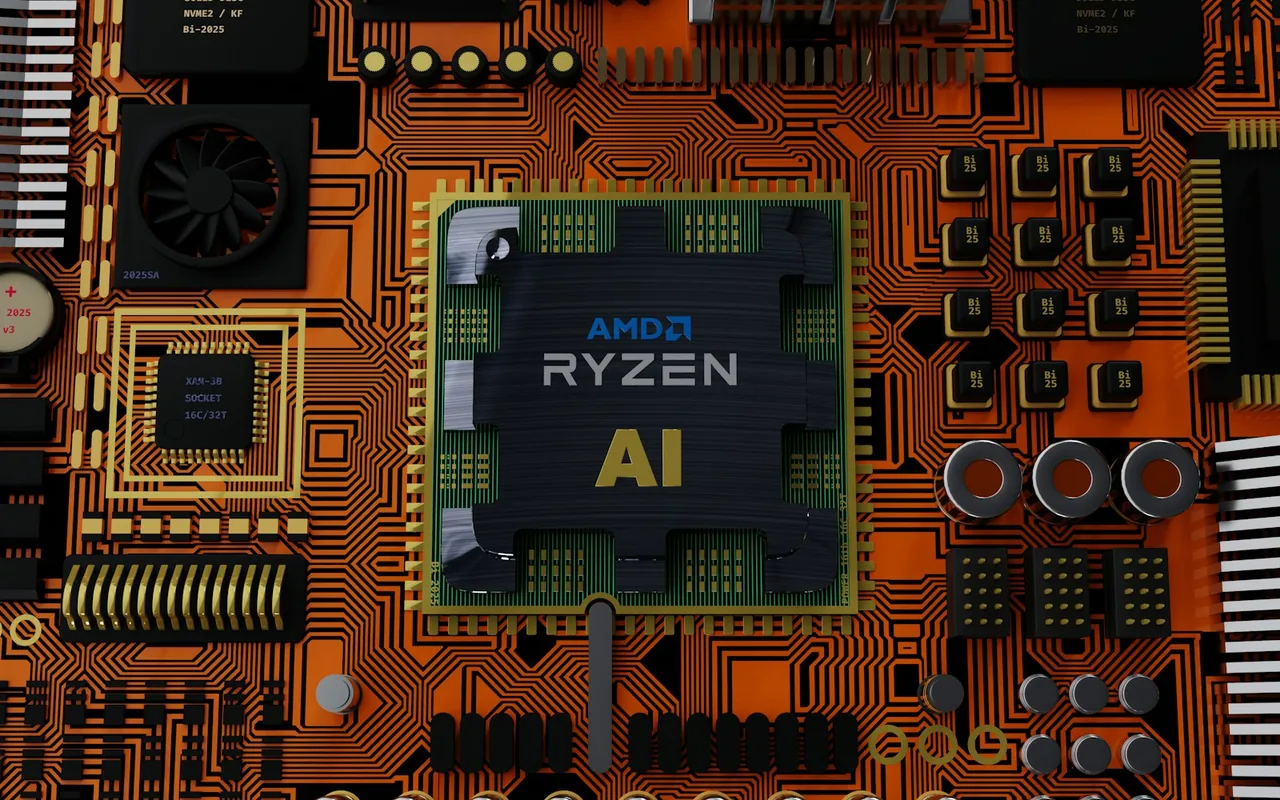
Blackwell RTX PRO — and a 72GB desktop GPU doing 2,142 TOPS — quietly moves “train and fine-tune locally” from cloud-only to under your desk. For builders, that changes the dependency math.

A 1.5-million-token context window is a design problem, not a feature
OpenAI's GPT-5.6 reportedly pushes context to 1.5M tokens and trims another 10–15% off the token bill. Bigger context doesn't free you from retrieval discipline — it moves where the discipline lives.

When a model launch becomes a customs event
Anthropic shipped Claude Fable 5 — 1M context, always-on reasoning — and a US export directive pulled it within days. The lesson for builders isn't about Anthropic. It's about dependency.

The dependency is the attack surface now
In 2026 the breach doesn't come through your code. It comes through the package you installed without reading. A backend engineer's note on supply-chain reality.
SWE-Bench is saturated — and that's the useful part
Every frontier model now clears 80% on SWE-Bench Verified. The benchmark didn't fail; it finished its job. What replaced it tells you what “good at coding” means in mid-2026.
Running SQLite in production stopped being a compromise
This site runs on FastAPI and a single SQLite file. In 2026 that isn't a corner I cut — it's the most defensible decision in the stack.
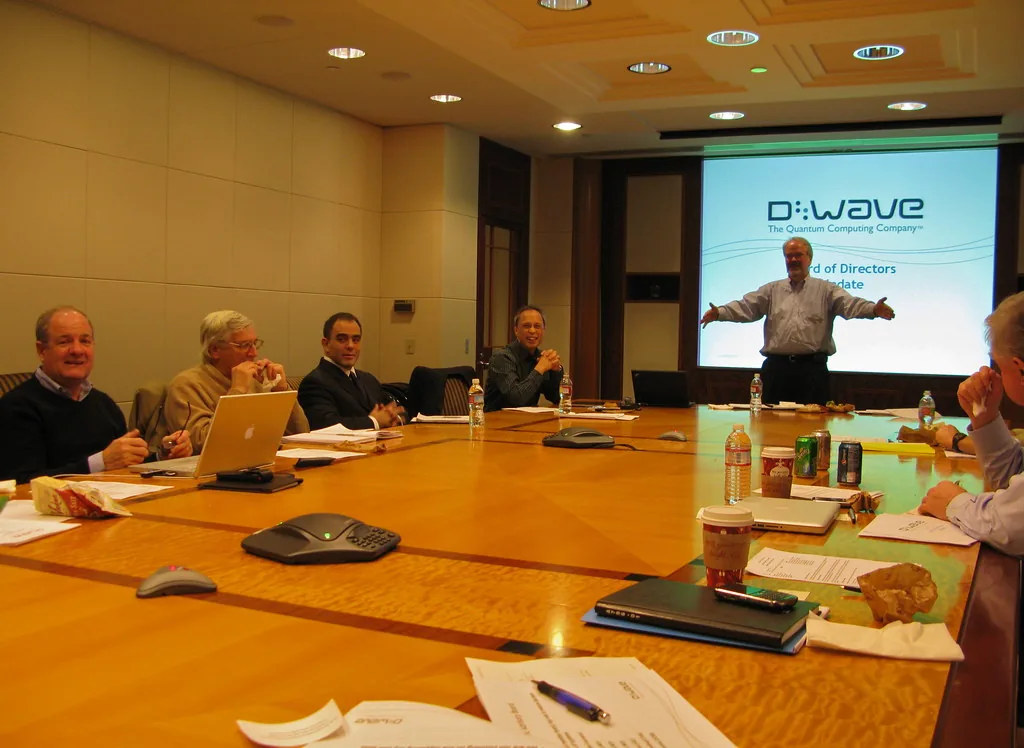
The June 2026 model wave — and why I still build for portability
Claude Fable 5, GPT-5.5, Gemini 3.5, Claude as an iPhone option — and an export-control order that pulled two frontier models overnight. A senior engineer's case for never hard-wiring your product to one model.
Who's actually funding AI in 2026 — and what it means if you're not OpenAI
Q1 2026 venture funding hit a record $300B, sovereign wealth funds now write the mega-checks, and capital is overheating in frontier AI while cooling almost everywhere else. A working engineer's read on the bifurcation.
AWS shipped agents that fix your CVEs. The hard part isn't the autonomy.
At AWS Summit New York 2026, Amazon unveiled agents that triage email and remediate security risks while trying to keep humans in control. The interesting engineering is in the guardrails, not the autonomy — and that's the part most teams skip.
— No articles match. Try a different search or category. —